
Robert Leonard | Oct 13 2026 15:00
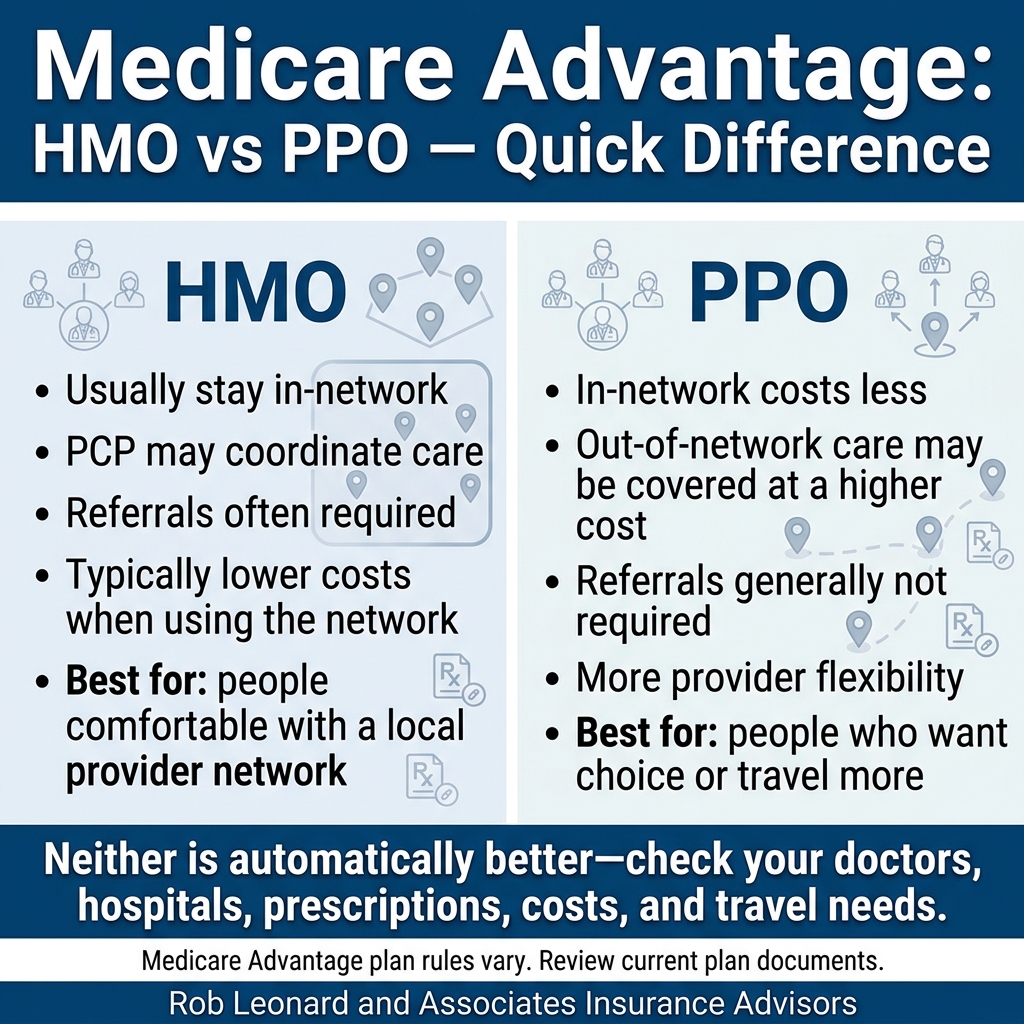
Quick Summary:
Choosing between an HMO and PPO Medicare Advantage plan can affect which doctors you can see, whether you need specialist referrals, and what you may pay for care. Neither option is automatically better—the right choice depends on your preferred providers, health needs, travel habits, prescriptions, and comfort with plan rules.
Medicare Advantage plans combine Medicare Part A and Part B coverage and usually include prescription drug coverage. While plans must cover emergency and urgent care, their provider networks, referral requirements, premiums, copays, drug formularies, and extra benefits can be very different. At Rob Leonard and Associates Insurance Advisors, we help Greensboro-area clients look beyond a plan’s headline premium and focus on how it may work in everyday life.
What Is an HMO Medicare Advantage Plan?
An HMO, or Health Maintenance Organization, generally centers your non-emergency care within a defined network of doctors, specialists, hospitals, and other providers. In many HMO plans, you select a primary care doctor who helps coordinate your care. You may also need a referral before seeing certain specialists.
According to Medicare’s comparison of plan types, HMO members generally need to use in-network providers except for emergency care, out-of-area urgent care, and temporary out-of-area dialysis. Some HMO Point-of-Service plans offer limited out-of-network benefits, but the member typically pays more.
This structure can be a strong fit for someone who is comfortable using a local provider network and values coordinated care. It can also be appealing when a person’s doctors, preferred hospital system, and prescription needs all fit the plan well.
What Is a PPO Medicare Advantage Plan?
A PPO, or Preferred Provider Organization, also has a provider network. The major difference is flexibility: you generally pay less when using in-network providers, but you may be able to receive covered care from an out-of-network provider at a higher cost. PPO plans typically do not require you to choose a primary care doctor or obtain a referral to see a specialist.
That flexibility does not mean every doctor or service will be covered in every circumstance. Before scheduling care outside the network, it is important to confirm that the provider participates in Medicare or accepts assignment and that the service is medically necessary and covered by the plan. Medicare explains these PPO considerations in its PPO plan overview.
For people who see multiple specialists, want a broader choice of providers, or spend extended time away from home, a PPO may be worth considering. The key is to weigh that added flexibility against the plan’s premium and the potentially higher out-of-network cost sharing.
Why Your Doctor and Hospital Relationships Come First
It is easy to start with television ads, extra benefits, or a low monthly premium. But the first practical question should usually be: Are my doctors, specialists, hospitals, and pharmacies part of this plan?
A plan can look attractive on paper but create frustration if a longtime cardiologist is not in network, a preferred hospital is excluded, or an important specialist requires a referral process that does not fit your needs. Provider directories can change, so it is wise to verify participation directly with both the plan and the provider’s office before enrolling.
For HMO members, receiving non-emergency care outside the network without the plan’s authorization can lead to substantial costs. For PPO members, care may still be available out of network, but the member’s share can be significantly higher. Rob Leonard and Associates Insurance Advisors encourages clients to compare in-network and out-of-network benefits rather than assuming a PPO makes every provider equally affordable.
Referrals, Prior Authorization, and Care Coordination
Referrals are one of the clearest day-to-day differences between these plan types. HMO plans commonly require a primary care provider to coordinate specialist care, while PPO plans generally do not require referrals. That does not make one system universally better. Some people appreciate having a primary doctor coordinate tests, medications, and specialist visits. Others prefer to schedule with a specialist directly.
Both HMO and PPO plans may use prior authorization for certain services, supplies, medications, or procedures. Prior authorization means the plan reviews whether it will cover the service before care is provided. It is a separate issue from a referral, and it is important to ask about both when comparing plans—especially if you anticipate imaging, outpatient procedures, rehabilitation, specialty medications, or ongoing treatment.
Comparing Costs Beyond the Monthly Premium
A $0 premium plan may be appropriate for some people, but it is never the full financial picture. Review the plan’s copays or coinsurance for primary care, specialists, hospital stays, outpatient surgery, diagnostic testing, ambulance services, skilled nursing care, and prescription drugs. Also review the plan’s annual out-of-pocket maximum for covered medical services.
For a PPO, compare the in-network and out-of-network amounts side by side. For an HMO, consider whether staying within the network is realistic for your established care team and lifestyle. A lower premium is less meaningful if you must change doctors or face higher costs for the services you use most often.
Prescription coverage deserves its own review. Most Medicare Advantage HMO and PPO plans include Part D drug coverage, but formularies, tiers, pharmacy networks, deductibles, and utilization rules vary by plan. A Medicare insurance review should include the exact medications you take—not simply the fact that a plan “has drug coverage.”
Travel and Seasonal Living Can Change the Answer
Emergency and urgent care are covered when needed, including when you are away from home. However, routine care while traveling or living seasonally in another state can be more complicated. An HMO’s local network may work very well for someone who receives most care near Greensboro. A PPO may offer more options for routine covered care outside the network, although it usually costs more.
If you regularly visit family for long periods, maintain a second residence, or receive specialty care in another region, bring those details into the conversation. The best Medicare Advantage plan is one that fits how and where you actually obtain care.
How to Make a Confident HMO or PPO Decision
Before choosing a Medicare Advantage plan, create a simple comparison list. Include your primary doctor, specialists, preferred hospitals, prescriptions and pharmacies, anticipated services, monthly budget, and travel plans. Then examine each plan’s Evidence of Coverage and Summary of Benefits for the specific county where you live.
At Rob Leonard and Associates Insurance Advisors, we believe Medicare decisions should be personal, not one-size-fits-all. As an independent insurance broker in Greensboro, NC, we help clients understand the tradeoffs among Medicare Advantage plans, Medicare Supplements, and Prescription Drug Plans so they can make informed coverage decisions.
FAQ
Is an HMO or PPO better for Medicare Advantage?
It depends on your situation. An HMO may be a good choice when your providers are in network and you are comfortable following network and referral rules. A PPO may be a better fit when provider flexibility is especially important and you understand the higher potential cost of out-of-network care.
Can I see a specialist without a referral in a Medicare Advantage plan?
PPO plans generally do not require referrals for specialists. HMO plans often do, although plan rules and exceptions can vary. Always check the individual plan’s current documents.
Does a PPO let me see any doctor for the same cost?
No. PPOs generally offer lower costs for in-network care. You may be able to see an out-of-network provider for covered services, but your share of the cost is usually higher.
What happens if my doctor leaves my Medicare Advantage network?
Your plan should notify you when a provider leaves its network. Contact the plan promptly to understand your options, choose a new in-network provider if needed, and ask how ongoing treatment will be handled.
Should I compare plans every year?
Yes. Provider networks, drug formularies, premiums, copays, and benefits can change from year to year. Reviewing your options during Medicare’s Annual Enrollment Period can help ensure your coverage still matches your needs.